What Is Conference Intelligence for B2B Sales Teams?
A practical definition of conference intelligence, with a record checklist that separates event evidence, buyer fit, and the next sales action.
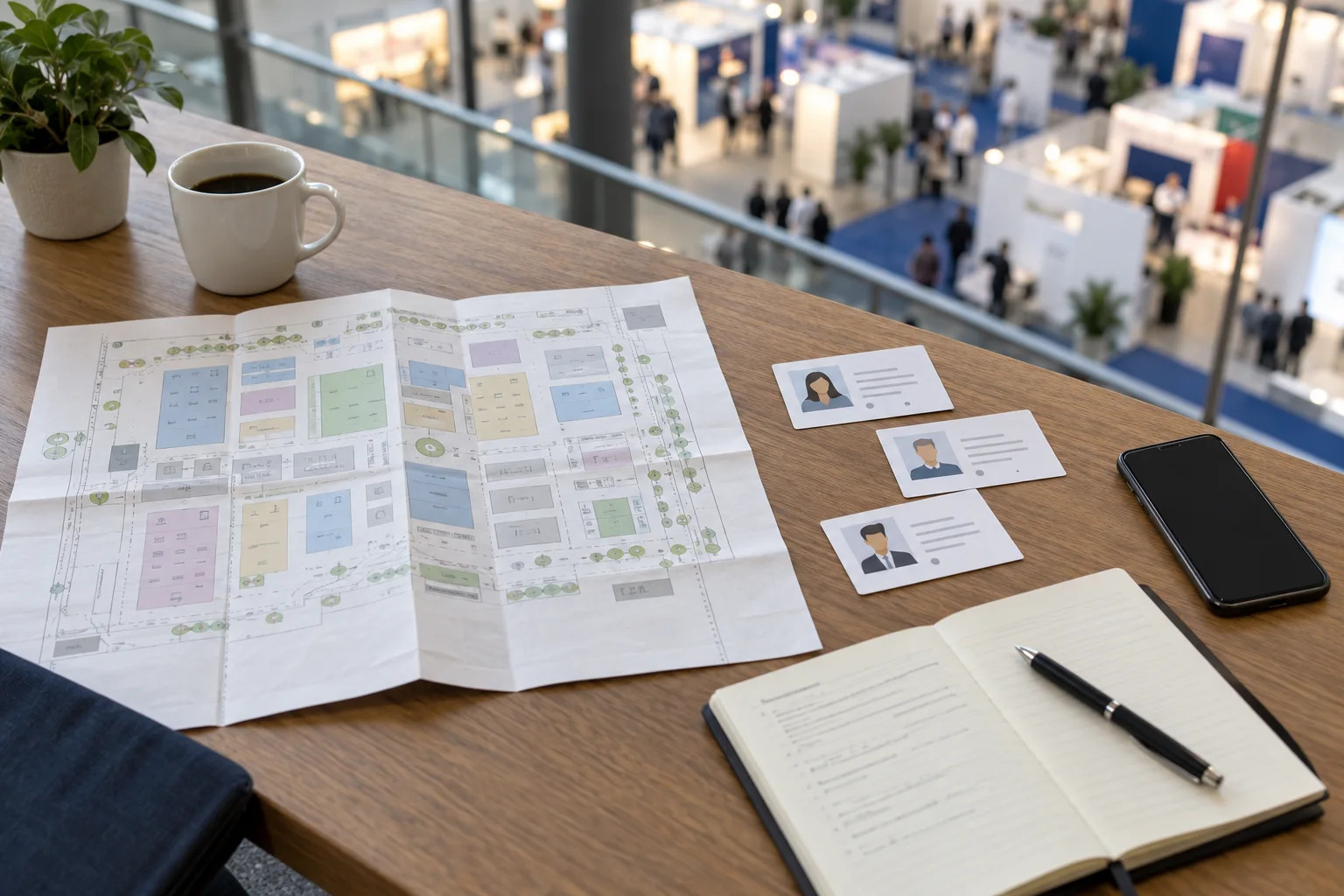
Conference intelligence is the event, company, and person information a B2B team uses to decide whom to meet and what to do next. At EarlyHall, we use the term for a process that connects source evidence, qualification, outreach, and sales records around a specific conference.
A useful record should answer: Why is this person associated with this event? Why might our offer matter to them? What action can we reasonably take?
An attendee spreadsheet can start that process. It needs more context before a rep can use it to plan a conversation. A speaker listing establishes an event role. A relevant job title suggests a possible fit. Neither establishes purchasing intent.
What conference intelligence needs to distinguish
When you review conference attendee data, keep the questions below separate. Avoid a single score that hides missing evidence.
Scroll horizontally to see all columns.
| Question | Evidence to record | Limit to preserve |
|---|---|---|
| Who is this person? | Name, current company, role, and a matching profile | A similar name can belong to someone else. |
| What connects them to the event? | Source URL, event edition, listed role, and date checked | A company exhibitor listing does not identify its attending employees. |
| What do we know about attendance? | Published listing, stated plan to attend, or direct confirmation, with its date | A published listing does not confirm arrival or availability. |
| Do they fit our offer? | Relevant responsibility, company characteristics, and a written fit reason | Company fit does not establish the person's buying role. |
| Can we contact them? | Available contact channel and its source | A contact address does not establish interest in a meeting. |
| Have they expressed a need? | Their words, request, or agreed next step | Attendance and seniority do not establish buying intent. |
Keep “unknown” available in every field where evidence may be absent. Otherwise, the spreadsheet can turn an assumption into an apparent fact.
In a Reddit discussion about booking meetings before events, the original poster questioned whether LinkedIn posts could capture more than a small subset of attendees. That question does not measure coverage. Ask the same question about your list: who could this source miss?
How attendee lists, lead capture, and CRM reporting fit together
For conference sales planning, assign each tool a specific job.
An attendee list gives you names or companies to investigate. Check the source and event edition before treating a record as relevant to your upcoming event.
Lead capture records a contact during the event. Add the conversation and any agreed action before you classify that contact as qualified.
Conference lead qualification compares the company and person with your offer. Record why a person fits, why they do not fit, or what remains uncertain.
CRM reporting connects event activity with later sales activity under your team's reporting rules. Keep the event association when you update the contact or opportunity.
In a Reddit discussion about trade show lead scanning, one seller reported many badge scans but few worthwhile follow-up contacts. Another commenter described recording the person's name, company, discussion, and action before updating the CRM. Other participants defended scanners as a way to save contact details. Evaluate contact capture and conversation quality separately when you review your own process.
Follow one record from source to next action
Here is an illustrative example. The people, company, and conference are fictional.
Your team sells maintenance scheduling software to manufacturers. You find Mara, a plant maintenance director at Northbank Components, on the speaker page for the upcoming Manufacturing Operations Forum.
The source supports a narrow statement: Mara is listed as a speaker for that edition. It does not establish that Northbank is buying software.
You add her profile after checking her name, company, and role. Her responsibility makes her worth researching. Her session covers equipment downtime, which provides a relevant topic for a message. It still does not prove that her team needs your product.
Record the evidence and the gaps together:
Scroll horizontally to see all columns.
| Field | Example entry |
|---|---|
| Event role | Listed speaker |
| Source | Speaker-page URL, edition, and date checked |
| Identity | Matching company and role on her profile |
| Fit reason | Maintenance responsibility overlaps with the problem our product addresses |
| Uncertainty | Current scheduling system, purchasing role, and meeting availability unknown |
| CRM check | No existing customer relationship or open deal found in the team's records |
| Next action | Assigned rep sends a brief invitation tied to the session topic |
The rep could write:
Hi Mara, I saw your session on equipment downtime at Manufacturing Operations Forum. We make maintenance scheduling software for manufacturers. Is comparing scheduling approaches relevant to your team? If so, would you be open to a coffee during the event?
This message uses the published session as context. It asks about relevance rather than announcing a need on Mara's behalf.
If Mara says she is attending to speak and has no time for sales meetings, record that response. If she names a colleague who owns scheduling, record the introduction separately. Do not label that colleague an attendee without event evidence.
EarlyHall's free sample for a named upcoming conference lets you inspect this process on 10 qualified attendee records. Review the source URLs, event roles, and fit reasons alongside the example before deciding which parts of the research your team needs help with.
A conference intelligence checklist for your next event
Start with a small set of records that your team could realistically review and contact.
- Define the offer and the company characteristics that make it relevant.
- Define the responsibilities of the person you want to meet.
- Check the event's audience against those requirements. The conference directory provides a starting point for event research.
- Record each person's source URL, event edition, listed role, and date checked.
- Check identity before combining information from different sources.
- Write a fit reason that another rep can challenge.
- Check existing customers, open deals, and contact ownership before assigning acquisition outreach.
- Choose an action that the evidence supports, including further research or no outreach.
- Record the conversation, response, and agreed next step after contact.
- Keep the event association in your CRM when the sales record changes.
Use a simple review rule: if a rep cannot explain the event connection and fit reason, return the record for research. If the person declines, use that response to change the next action.
Keep event evidence when you measure results
In a Reddit discussion about conference ROI, a marketer described difficulty tracking meetings, opportunities, and deals over a long customer lifecycle. This was one team's reporting problem, rather than a measure of typical conference returns.
For your own process, distinguish a person sourced through an event from an existing opportunity that received an event meeting. Record meetings held separately from invitations accepted. These are proposed reporting rules; agree on them with sales before the event.
An event tag helps you find the records later. It does not establish that the event caused a deal to close.
What EarlyHall provides
EarlyHall builds lists for upcoming conferences from public sources and event apps when you provide access. Records include source URLs and event roles. A listing is never presented as confirmed attendance, and complete coverage is not promised.
The attendee list starts at $349 per event and receives updates twice weekly until the event ends. Qualification, enrichment, buyers beyond attendees, CRM sync, and email and LinkedIn outreach are paid add-ons. With CRM sync, event tags support reporting in your own CRM.
To assess the evidence before ordering, request a free sample of 10 qualified attendees for a named upcoming conference. Provide the conference name or URL and what you sell. The sample arrives within three business days. Check the source evidence and fit reasons against the checklist above.